In reply to a question by Somnath MLA Vimal Chudasama, the state government said on Monday that in total, 65 big cats including lions, lion cubs and leopards have died unnaturally in the two years ending on December 31, 2017. The government, however, in its reply did not take into account deaths of lionesses.The government claimed that 291 big cats including lions, lion cubs and leopards have died in the last two years, among which there were 110 lions and lion cubs and 181 leopards.
Read more...

The hunt for British Big Cats attracts far more newspaper column-inches than any other cryptozoological subject. There are so many of them now that we feel that they should be archived by us in some way, so we should have a go at publishing a regular round-up of the stories as they come in. Curated by Carl Marshall and Olivia McCarthy

Saturday, 31 March 2018

NEWSLINK: Two big cats dead in Rajasthan
 Two male tigers have died in separate incidents in the tiger reserves of Sariska and Ranthambore in Rajasthan over the past two days, officials said today.
A 13-year old tiger died after he was rescued from a village in Khandar area near Ranthambore National Park in Sawai Madhopur district today.
"The tiger strayed and went close to a village where people surrounded him. A team of the forest department tranquilised and shifted him to a forest area, but he died after some time," Y K Sahu, chief conservator of forest (Sawai Madhopur), said.
Read more...
NEWSLINK: Leopards could reduce rabies by controlling stray dog numbers in India, study finds
 Leopards are among the most widespread of all big cats, with a historical range covering large parts of Africa and Asia. Though humans have whittled away about 80 percent of that area, the big cats still overlap with some of the world’s largest concentrations of people. That convergence can be a recipe for conflict, but a recent study finds that leopards in India could be helping to keep people in India safe from rabies-laden dog bites.
Read more...
NEWSLINK: Kiwi petitions for snow leopard sanctuary in the Southern Alps
 A petition has been put forward to create a snow leopard sanctuary in the South Island of New Zealand - an idea scientists have called "risky".
Brian Daly of Hastings is petitioning the Ministry for the Environment to create a sanctuary as "ecological back-up" for the threatened species that are endemic to Central and South Asia.
He wants a private landowner in the high country near the Southern Alps to give up land for the safe haven.
In his petition, he writes the sanctuary could provide "an important tourism initiative where people can view them more easily than in their native environment".
Read more...
NEWSLINK: Lions, tigers to stroll in natural habitat at city zoo
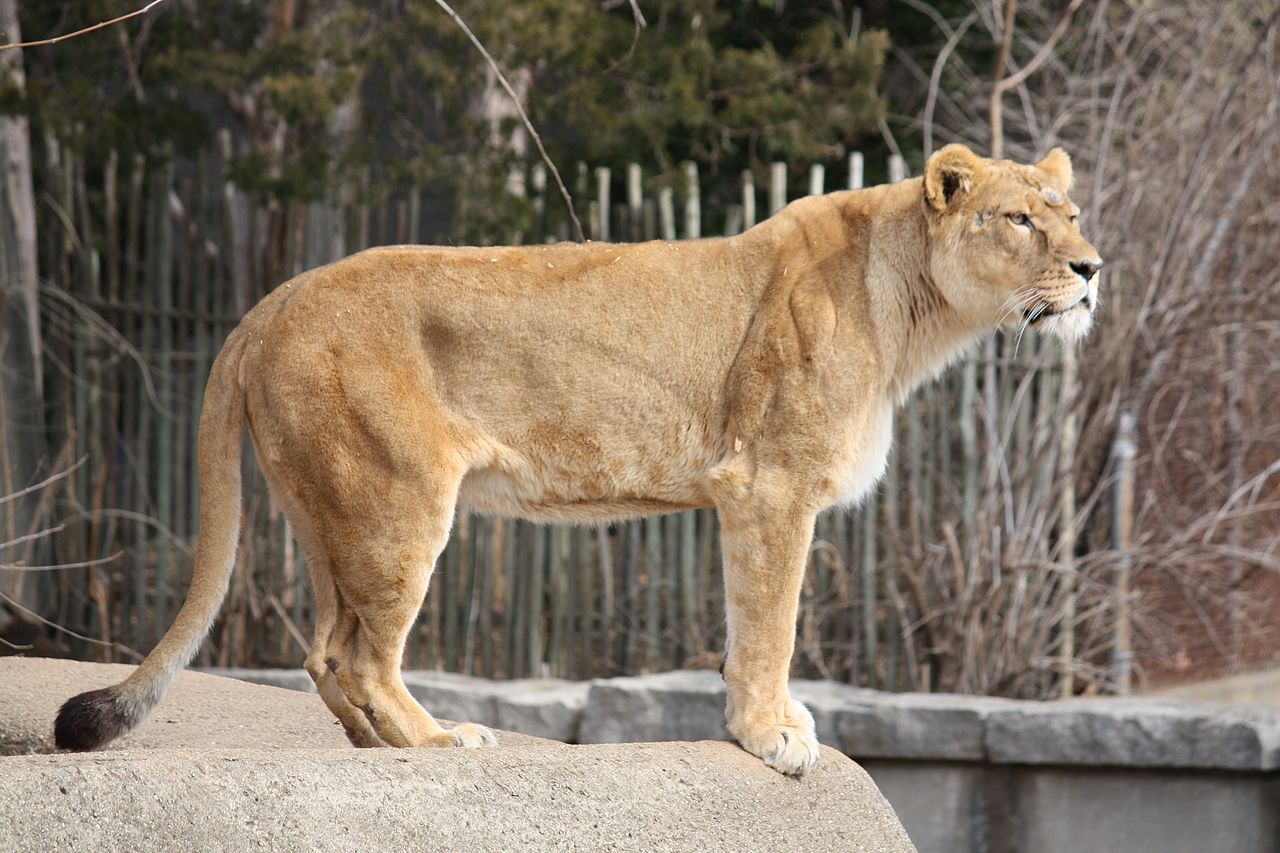 Soon, you will be able to see the big wild cats roam around freely in their natural habitat in the city. The civic body has drawn up ambitious plans to revamp the Sayajibaug zoo that is one of the most popular destinations here.
The zoo that took off in 1879 is home to several animals and exotic birds brought here from different parts of the country.
“For the first time since the zoo was made during the rule of Maharaja Sayajirao Gaekwad III, it is being revamped as per the contemporary needs. The idea is to give an open space to the animals and birds and let them live in their natural environs. There won’t be any cages with cramped spaces for the animals and birds in the zoo anymore,” said Dr Vinod Rao, municipal commissioner.
Read more...
NEWSLINK: How community averts lions' attacks, reaps big
 Near the foot of Amboseli National Park in Eselenkei Conservancy, senior warden David Kitasho gazed down at a pride of lions lapping water at a nearby water point.
Kitasho, whose name means a double lion killer in Maasai, watched delightedly as the large carnivores rolled themselves on the ground before they disappeared into some thickets not far away from the shallow water pan.
Though not a lion killer himself, the warden says he got the name from his father, who was revered by his peers and locals for killing nine lions in his Morani hey-days.
Read more...
Thursday, 29 March 2018
NEWSLINK: Eastern cougars are extinct — or are they?
 The eastern cougar is a gone cat.
The U.S. Fish and Wildlife Service formally declared it extinct in January. This was no surprise. The last time anyone saw one was in New Brunswick in 1938.
But there are these big cats people keep seeing.
Mike Bird of New Milford saw one crossing Hardscrabble Road in 2016. He watched it walk for about 40 yards before it ducked into the woods.
“A cat crossed from the left to the right,” Bird said. “I thought, ‘It’s too big to be a bobcat.’ I could see its big tail.”
Read more...
Subscribe to:
Posts (Atom)